Where solar energy meets sustainable farming, WOSCA is piloting a new model of climate‑smart agriculture that empowers tribal farmers with both harvests and clean power.
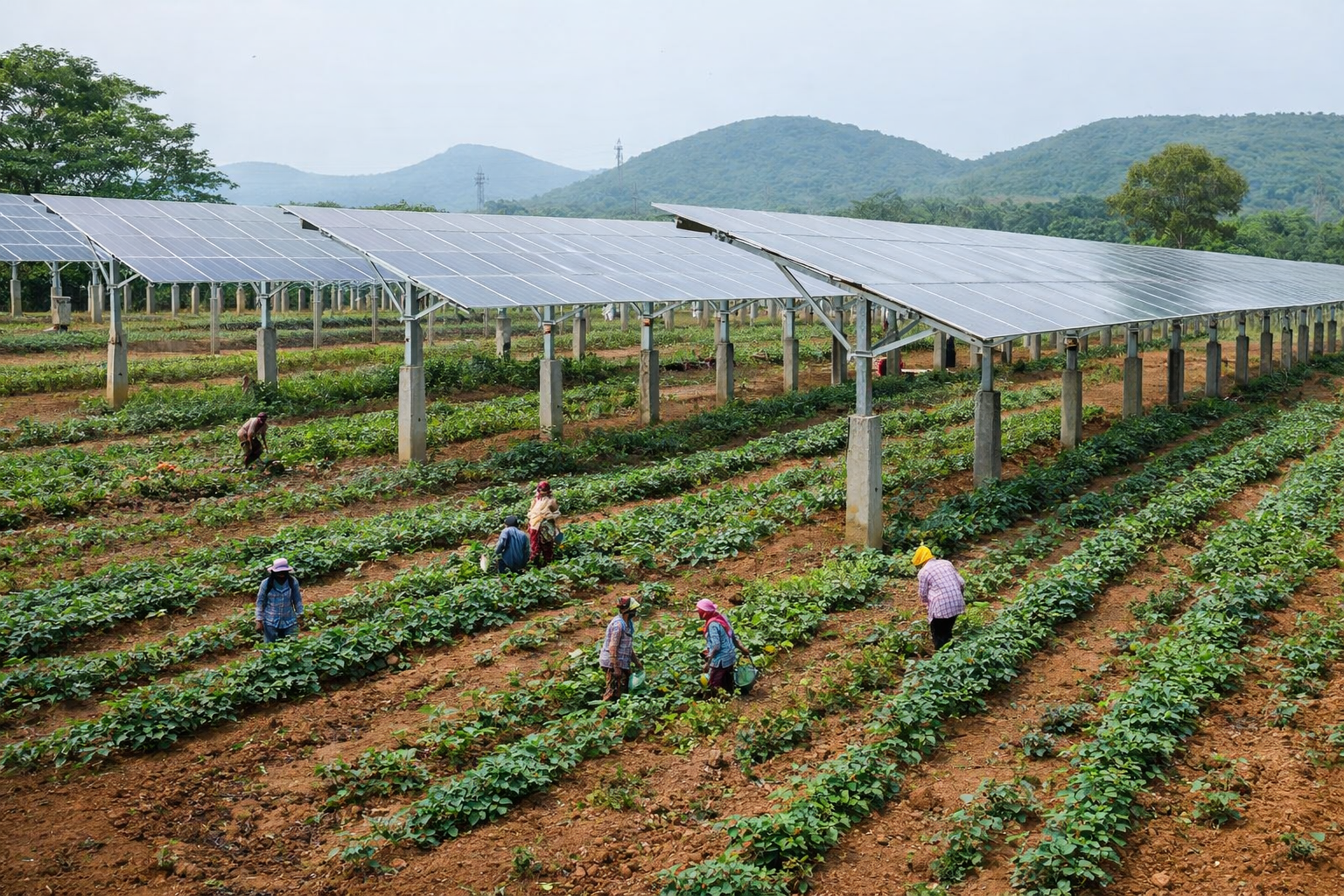
WOSCA has launched a pioneering Agri‑Photo Voltaic (APV) Plant in Kulabir village, Nandpur block of Koraput district — a land of tribals and nature. This 1 MW pilot project, spread over 5 acres, is designed to showcase how renewable energy and sustainable agriculture can thrive together on the same parcel of land.
The APV model introduces solar energy as a “third crop,” enabling tribal farmers to generate income not only from traditional cultivation but also from solar power production. By combining crop production with renewable energy generation, the initiative creates a stable revenue stream for farmers and landowners.
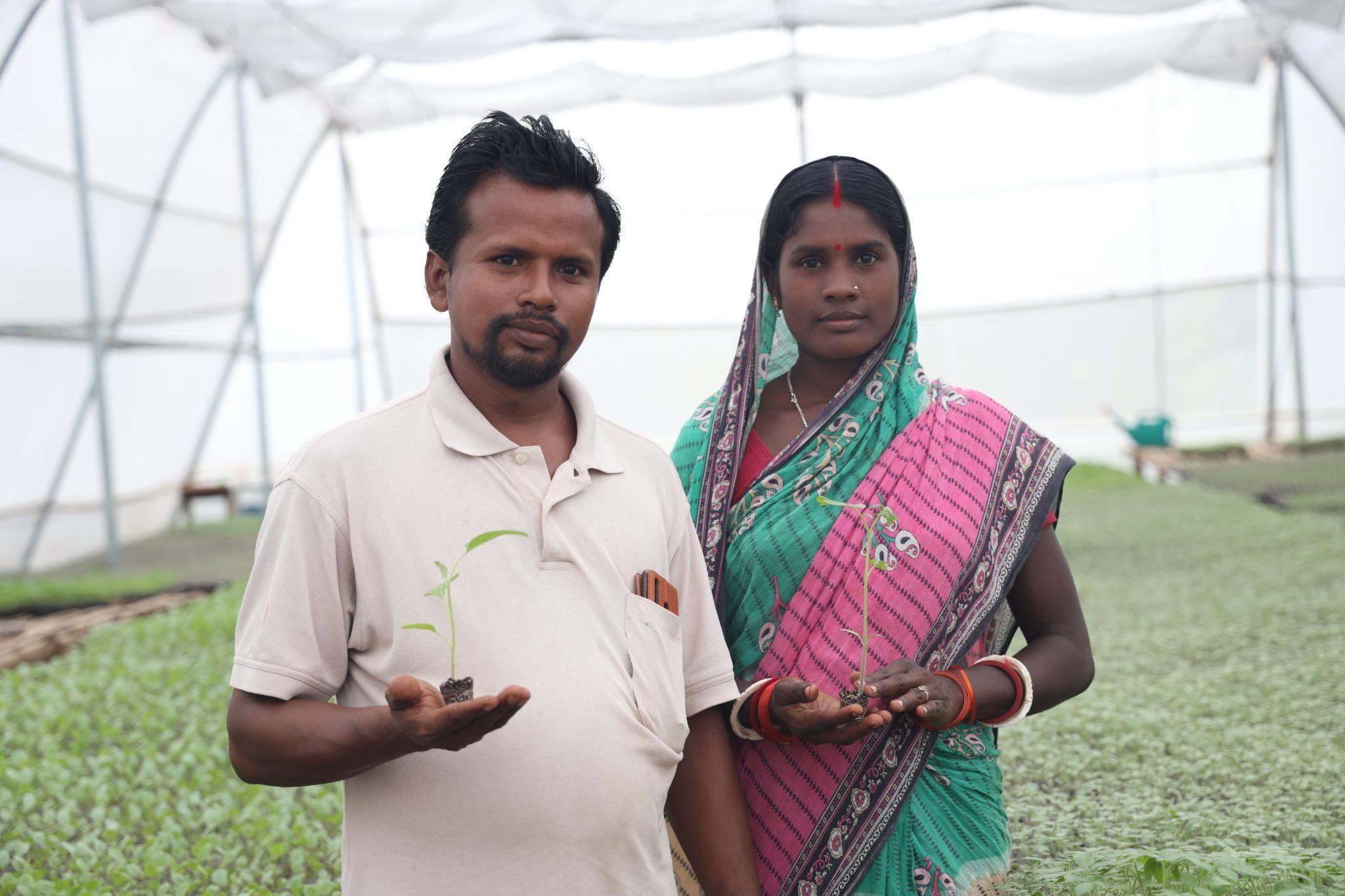
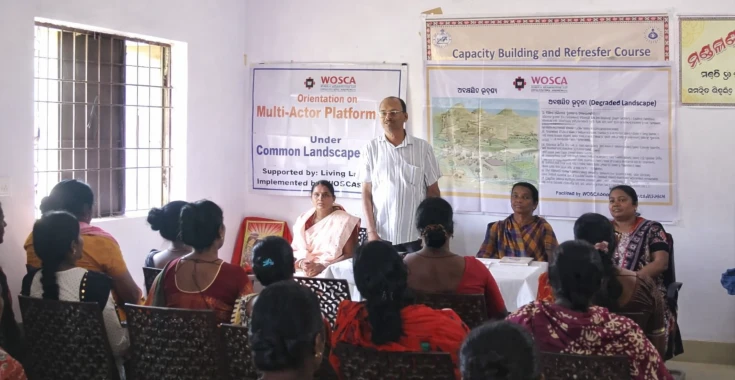
A key focus of the project is the strengthening of Farmer Producer Organizations. Implemented on a revenue‑sharing model, the APV ensures that benefits are equitably distributed among members and landowners, reinforcing community ownership and financial sustainability.