Emergency transport for pregnant women, child health support, and community referrals in remote villages.
Harichandanpur block in Keonjhar district is characterized by rugged terrain and limited transport options that routinely delay access to essential health services.
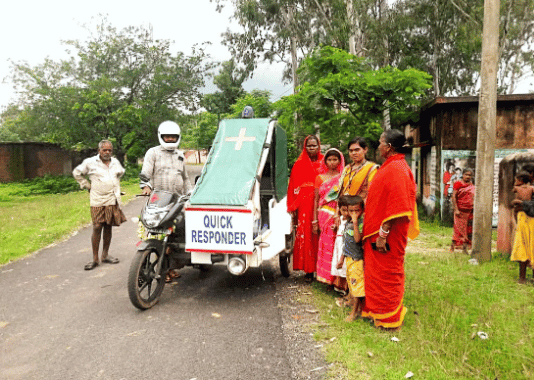
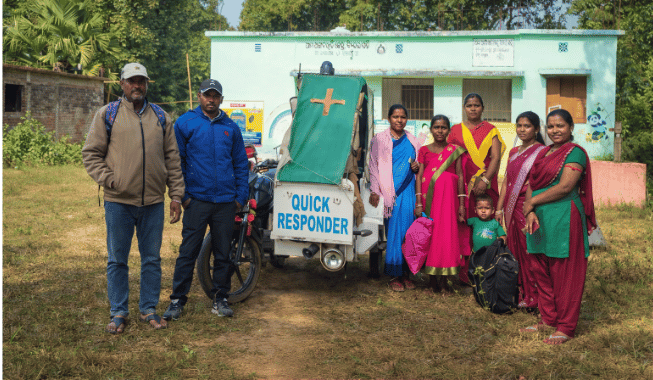
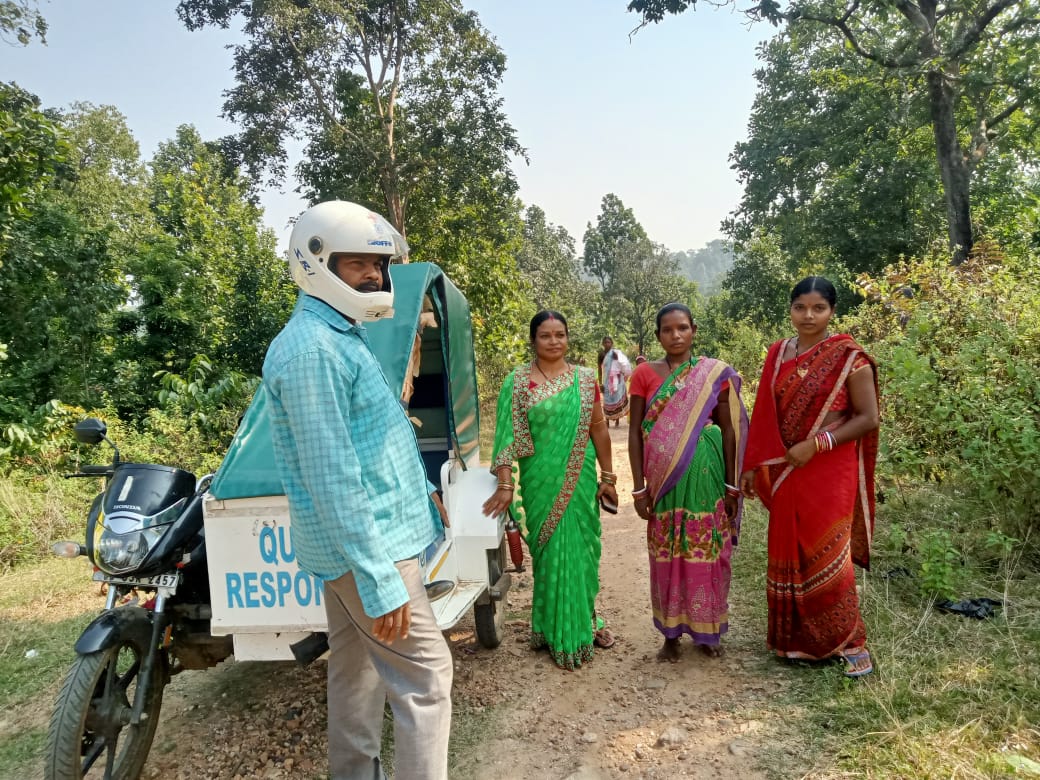
To overcome these barriers, a modified four-stroke motor-bike ambulance—fitted with a sidecar mattress and a first-aid kit—was introduced to provide rapid, reliable transport for pregnant women, sick children, and other vulnerable patients from remote villages to the Maternity Waiting Home Maa Gruha, Revnapalaspal, and nearby Community Health Centers.
The service operates as a community-linked emergency transport system: trained riders and attendants remain on call to respond to referrals from ASHA workers, ANMs, and family members.
Each trip carries basic emergency supplies and infection-control materials, and the sidecar mattress ensures a dignified, secure transfer to the receiving facility.
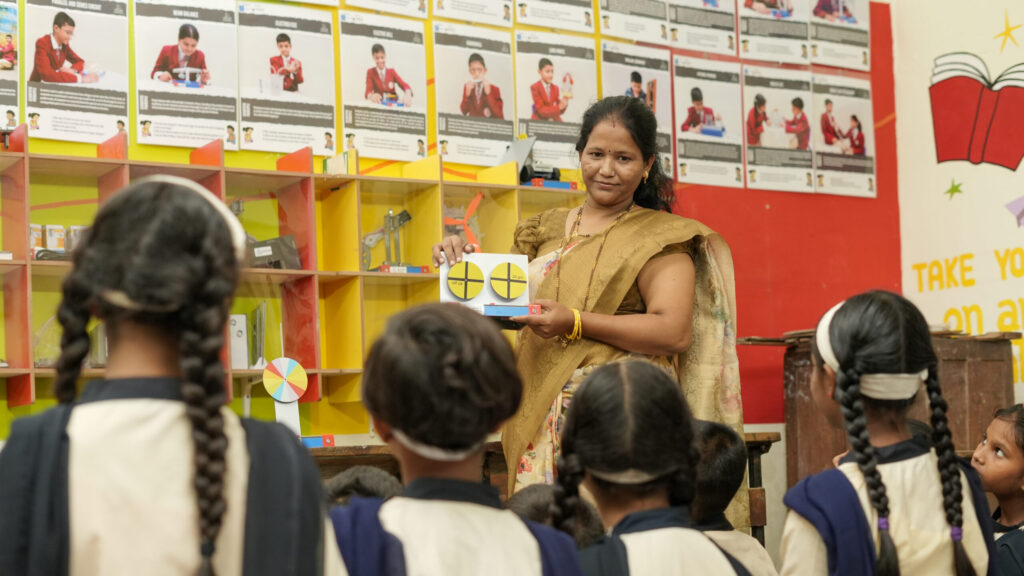
Regular community outreach raises awareness about the service, explains eligibility, and guides villagers on how to request transport.
Routine vehicle maintenance, fuel management, and systematic record keeping support reliability, while coordination with CHC staff, NHM representatives, SHGs, and village leaders maintains strong referral linkages and continuous quality improvement.
Since inception the program has produced measurable gains in maternal and child health access.
A total of 1,950 safe maternal transports have been completed, including 511 women brought to the Maternity Waiting Home and 440 shifted for postnatal check-ups.
In 2024–25 alone the service transported 550 patients across 36 villages, covering over 7,080 km with an average response time of 45 minutes, and contributed to 880 institutional deliveries while reducing home births.
Beyond these figures, the program has strengthened trust between communities and health providers and improved timely uptake of vaccinations and emergency care for children.
For expectant mothers in remote hamlets the motor-bike ambulance is more than transport—it is reassurance. Women who once delayed seeking care now reach the Maternity Waiting Home in time for skilled delivery; families report fewer complications and faster referrals.
Health workers note improved newborn follow-up and higher vaccination completion.
The program has also mobilized local SHGs and community leaders to support and sustain the service, demonstrating a scalable, low-cost model that can be adapted to other hard-to-reach areas to reduce health inequities and expand access to lifesaving care.